UPSC CSE | GS PAPER III – ECONOMY & INFRASTRUCTURE
1. IN NEWS
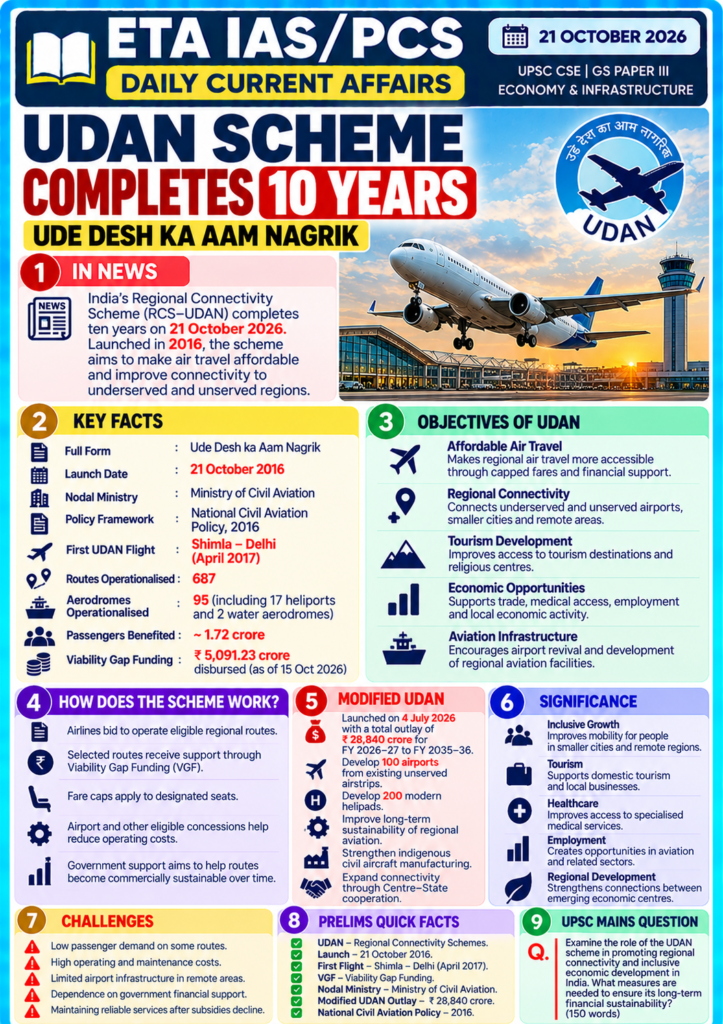
India’s Regional Connectivity Scheme (RCS–UDAN) completes ten years on 21 October 2026. Launched in 2016, the scheme aims to make air travel affordable and improve connectivity to underserved and unserved regions.
2. KEY FACTS
- Full Form: Ude Desh ka Aam Nagrik
- Launch Date: 21 October 2016
- Nodal Ministry: Ministry of Civil Aviation
- Policy Framework: National Civil Aviation Policy, 2016
- First UDAN Flight: Shimla–Delhi, April 2017
- Routes Operationalised: 687
- Aerodromes Operationalised: 95, including 17 heliports and 2 water aerodromes
- Passengers Benefited: Approximately 1.72 crore
- Viability Gap Funding (VGF): ₹5,091.23 crore disbursed as of 15 October 2026.
3. OBJECTIVES OF UDAN
A. Affordable Air Travel
Makes regional air travel more accessible through capped fares on eligible seats and financial support.
B. Regional Connectivity
Connects underserved and unserved airports, smaller cities and remote areas.
C. Tourism Development
Improves access to tourism destinations and religious centres.
D. Economic Opportunities
Supports trade, medical access, employment and local economic activity.
E. Aviation Infrastructure
Encourages airport revival and the development of regional aviation facilities.
4. HOW DOES THE SCHEME WORK?
- Airlines bid to operate eligible regional routes.
- Selected routes receive support through Viability Gap Funding.
- Fare caps apply to designated seats under the scheme.
- Airport and other eligible concessions help reduce operating costs.
- Government support is intended to help routes become commercially sustainable over time.
5. MODIFIED UDAN
The next phase, launched on 4 July 2026, has a total outlay of ₹28,840 crore for FY 2026–27 to FY 2035–36. Its priorities include:
- Developing 100 airports from existing unserved airstrips.
- Developing 200 modern helipads.
- Improving the long-term sustainability of regional aviation.
- Strengthening indigenous civil aircraft manufacturing.
- Expanding connectivity through Centre–State cooperation.
6. SIGNIFICANCE
- Inclusive Growth: Improves mobility for people in smaller cities and remote regions.
- Tourism: Supports domestic tourism and local businesses.
- Healthcare: Improves access to specialised medical services.
- Employment: Creates opportunities in aviation and related sectors.
- Regional Development: Strengthens connections between emerging economic centres.
7. MAJOR CHALLENGES
- Low passenger demand on some routes.
- High operating and maintenance costs.
- Limited airport infrastructure in remote areas.
- Dependence on government financial support.
- Maintaining reliable services after subsidies decline.
8. PRELIMS QUICK FACTS
- UDAN: Regional Connectivity Scheme.
- Launch: 21 October 2016.
- First Flight: Shimla–Delhi, April 2017.
- VGF: Viability Gap Funding.
- Nodal Ministry: Ministry of Civil Aviation.
- Modified UDAN Outlay: ₹28,840 crore.
- National Civil Aviation Policy: 2016.
9. UPSC MAINS QUESTION
Q. Examine the role of the UDAN scheme in promoting regional connectivity and inclusive economic development in India. What measures are needed to ensure its long-term financial sustainability? (150 words)
CONCLUSION
UDAN has expanded access to regional air travel over the past decade. Its next phase must focus not only on connectivity but also on reliable operations, viable routes and sustainable aviation infrastructure.
ETA IAS/PCS | Prepare Today, Lead Tomorrow