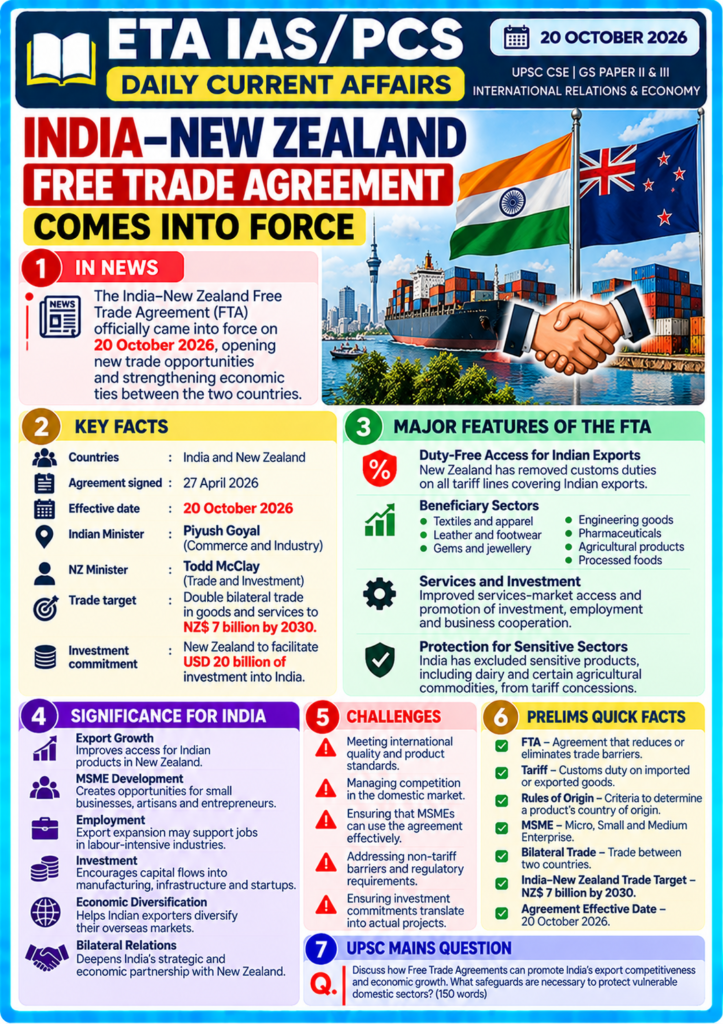
UPSC CSE | GS PAPER II & III – INTERNATIONAL RELATIONS AND ECONOMY
1. IN NEWS
The India–New Zealand Free Trade Agreement (FTA) officially came into force on 20 October 2026, opening new trade opportunities between the two countries. The agreement aims to expand bilateral trade, improve market access for exporters and encourage investment.
2. KEY FACTS
- Countries: India and New Zealand
- Agreement signed: 27 April 2026
- Effective date: 20 October 2026
- Indian Minister: Piyush Goyal, Minister of Commerce and Industry
- New Zealand Minister: Todd McClay, Minister for Trade and Investment
- Trade target: Double bilateral trade in goods and services to NZ$7 billion by 2030.
- Investment commitment: New Zealand has committed to facilitate USD 20 billion of investment into India.
3. MAJOR FEATURES OF THE FTA
A. Duty-Free Access for Indian Exports
New Zealand has removed customs duties on all tariff lines covering Indian exports, creating opportunities for Indian businesses in its market.
B. Beneficiary Sectors
- Textiles and apparel
- Leather and footwear
- Gems and jewellery
- Engineering goods and machinery
- Pharmaceuticals and chemicals
- Agricultural products and processed foods
C. Services and Investment
The agreement provides improved services-market access and aims to promote investment, employment and cooperation between businesses.
D. Protection for Sensitive Sectors
India has excluded sensitive products, including dairy and certain agricultural commodities, from tariff concessions to protect domestic producers.
4. SIGNIFICANCE FOR INDIA
- Export Growth: Improves access for Indian products in New Zealand.
- MSME Development: Creates opportunities for small businesses, artisans and entrepreneurs.
- Employment: Export expansion may support jobs in labour-intensive industries.
- Investment: Encourages capital flows into manufacturing, infrastructure and startups.
- Economic Diversification: Helps Indian exporters diversify their overseas markets.
- Bilateral Relations: Deepens India’s strategic and economic partnership with New Zealand.
5. CHALLENGES
- Meeting international quality and product standards.
- Managing competition in the domestic market.
- Ensuring that MSMEs can use the agreement effectively.
- Addressing non-tariff barriers and regulatory requirements.
- Ensuring investment commitments translate into actual projects.
6. PRELIMS QUICK FACTS
- FTA: An agreement that reduces or eliminates trade barriers between participating economies.
- Tariff: A customs duty imposed on imported or exported goods.
- Rules of Origin: Criteria used to determine a product’s country of origin for trade preferences.
- MSME: Micro, Small and Medium Enterprise.
- Bilateral Trade: Trade between two countries.
- India–New Zealand Trade Target: NZ$7 billion by 2030.
- Agreement Effective Date: 20 October 2026.
7. UPSC MAINS QUESTION
Q. Discuss how Free Trade Agreements can promote India’s export competitiveness and economic growth. What safeguards are necessary to protect vulnerable domestic sectors? (150 words)
CONCLUSION
The India–New Zealand FTA creates new opportunities for exporters, service providers and investors. Its success will depend on effective implementation, export competitiveness, regulatory cooperation and safeguards for sensitive domestic sectors.
ETA IAS/PCS | Prepare Today, Lead Tomorrow