UPSC CSE | GS PAPER III – INDIAN ECONOMY
1. IN NEWS
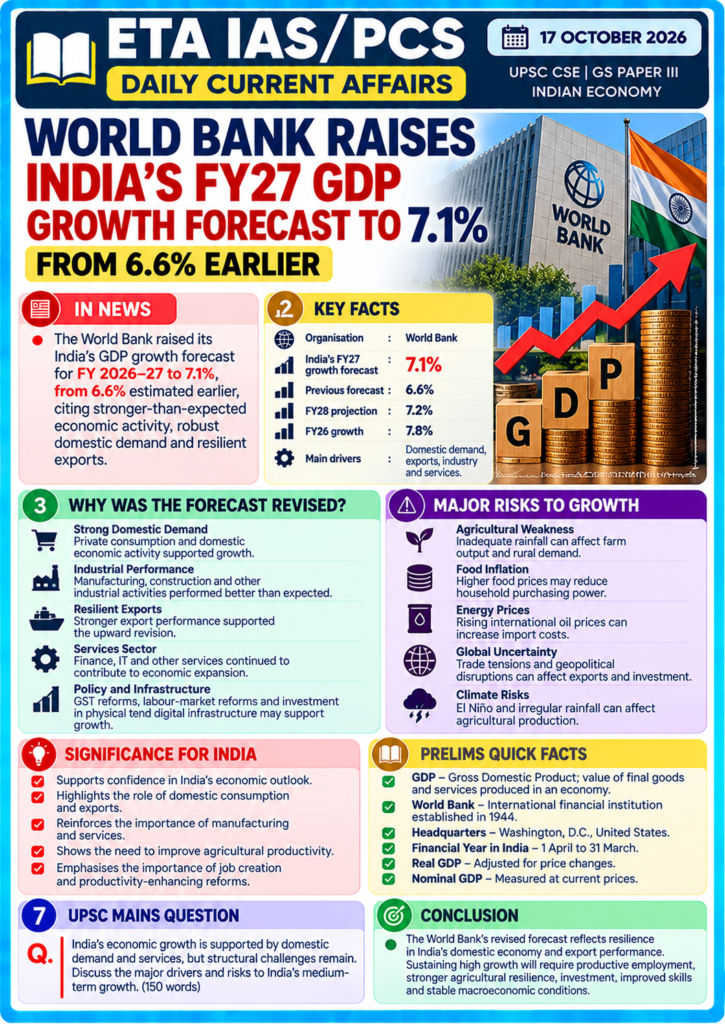
The World Bank raised its GDP growth forecast for India for Financial Year 2026–27 to 7.1%, from 6.6% estimated earlier, citing stronger-than-expected economic activity, robust domestic demand and resilient exports. The revised forecast was reported on 6 October 2026.
2. KEY FACTS
- Organisation: World Bank
- India’s FY27 GDP growth forecast: 7.1%
- Previous forecast: 6.6%
- FY28 growth projection: 7.2%
- FY26 growth: 7.8%, as reported in the update
- Main growth drivers: Domestic demand, exports, industry and services.
3. WHY WAS THE FORECAST REVISED?
A. Strong Domestic Demand
Private consumption and domestic economic activity supported growth.
B. Industrial Performance
Manufacturing, construction and other industrial activities performed better than expected.
C. Resilient Exports
Stronger export performance supported the upward revision.
D. Services Sector
Finance, information technology and other services continued to contribute to economic expansion.
E. Policy and Infrastructure
GST reforms, labour-market reforms and investment in physical and digital infrastructure may support medium-term growth.
4. MAJOR RISKS TO GROWTH
- Agricultural Weakness: Inadequate rainfall can affect farm output and rural demand.
- Food Inflation: Higher food prices may reduce household purchasing power.
- Energy Prices: Rising international oil prices can increase import costs.
- Global Uncertainty: Trade tensions and geopolitical disruptions can affect exports and investment.
- Climate Risks: El Niño and irregular rainfall can affect agricultural production.
5. SIGNIFICANCE FOR INDIA
- Supports confidence in India’s economic outlook.
- Highlights the role of domestic consumption and exports.
- Reinforces the importance of manufacturing and services.
- Shows the need to improve agricultural productivity.
- Emphasises the importance of job creation and productivity-enhancing reforms.
6. PRELIMS QUICK FACTS
- GDP: Gross Domestic Product; measures the value of final goods and services produced within an economy during a given period.
- World Bank: International financial institution established in 1944 at the Bretton Woods Conference.
- Headquarters: Washington, D.C., United States.
- Financial Year in India: 1 April to 31 March.
- Real GDP: GDP adjusted for price changes.
- Nominal GDP: GDP measured at current prices.
7. UPSC MAINS QUESTION
Q. India’s economic growth is supported by domestic demand and services, but structural challenges remain. Discuss the major drivers and risks to India’s medium-term growth. (150 words)
CONCLUSION
The World Bank’s revised forecast reflects resilience in India’s domestic economy and export performance. Sustaining high growth will require productive employment, stronger agricultural resilience, investment, improved skills and stable macroeconomic conditions.
ETA IAS/PCS | Prepare Today, Lead Tomorrow