UPSC CSE | GS PAPER III – INDIAN ECONOMY
- IN NEWS
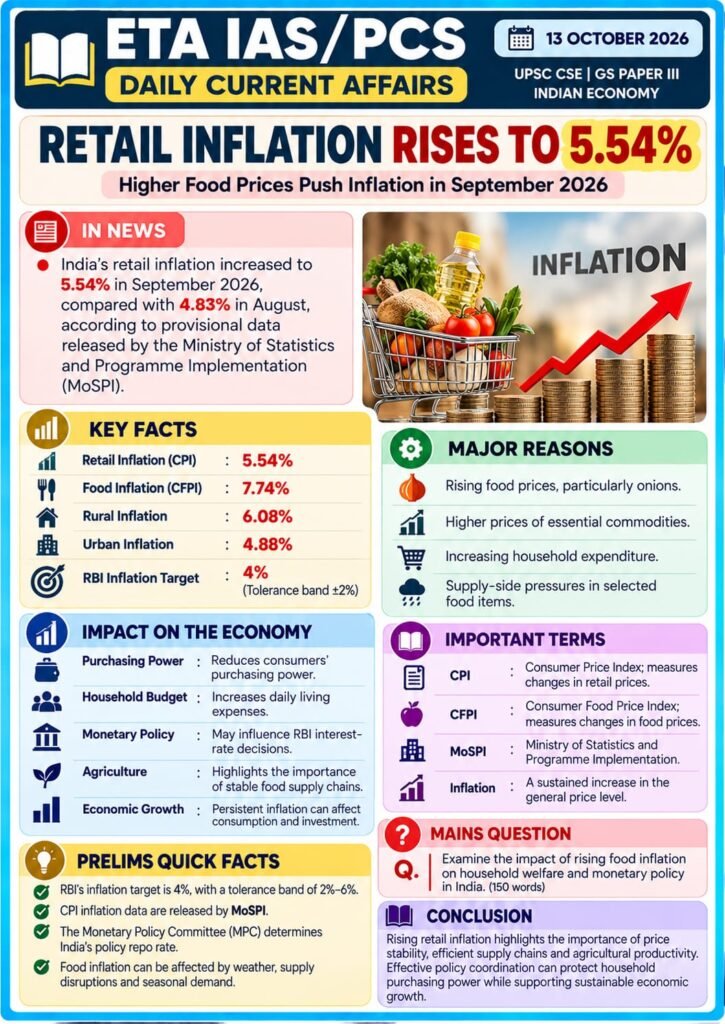
India’s retail inflation increased to 5.54% in September 2026, compared with 4.83% in August, according to provisional data released by the Ministry of Statistics and Programme Implementation (MoSPI).
- KEY FACTS
- Retail Inflation (CPI): 5.54%
- Food Inflation (CFPI): 7.74%
- Rural Inflation: 6.08%
- Urban Inflation: 4.88%
- RBI Inflation Target: 4%, with a tolerance band of ±2 percentage points.
- MAJOR REASONS
- Rising food prices, particularly onions.
- Higher prices of essential commodities.
- Increasing household expenditure.
- Supply-side pressures in selected food items.
- IMPACT ON THE ECONOMY
- Purchasing Power: Reduces consumers’ purchasing power.
- Household Budget: Increases daily living expenses.
- Monetary Policy: May influence RBI interest-rate decisions.
- Agriculture: Highlights the importance of stable food supply chains.
- Economic Growth: Persistent inflation can affect consumption and investment.
- IMPORTANT TERMS
- CPI: Consumer Price Index; measures changes in retail prices.
- CFPI: Consumer Food Price Index; measures changes in food prices.
- MoSPI: Ministry of Statistics and Programme Implementation.
- Inflation: A sustained increase in the general price level.
- PRELIMS QUICK FACTS
- RBI’s inflation target is 4%, with a tolerance band of 2%–6%.
- CPI inflation data are released by MoSPI.
- The Monetary Policy Committee (MPC) determines India’s policy repo rate.
- Food inflation can be affected by weather, supply disruptions and seasonal demand.
- UPSC MAINS QUESTION
Q. Examine the impact of rising food inflation on household welfare and monetary policy in India. (150 words)
CONCLUSION
Rising retail inflation highlights the importance of price stability, efficient supply chains and agricultural productivity. Effective policy coordination can protect household purchasing power while supporting sustainable economic growth.
ETA IAS/PCS | Prepare Today, Lead Tomorrow